Water Leak Warning Signs: What to Record Before Calling a Plumber
Record safe observations, photographs and water-use changes before a plumbing assessment, while separating leak clues, diagnosis, repair and restoration costs.
On this page
- Start with what you can observe safely
- Make a short incident record
- Use the water bill as a clue
- Understand what a leak alert can tell you
- Keep a small-loss calculation separate from damage costs
- Ask what the plumber’s initial charge includes
- Coordinate responsibility and preserve records
- Related guides
- Common questions
- Sources and references
A damp patch, an unexpected water bill or a recurring drip deserves attention, but none of these observations identifies every possible cause on its own. A useful first step is to collect clear, safe observations for the person who can investigate. This guide focuses on records, questions and cost comparisons before calling a plumber. It is not a guide to opening walls, repairing pressurised pipes or working near electricity. An active leak or unsafe area needs prompt appropriate help; paperwork should never delay dealing with immediate danger.
Start with what you can observe safely
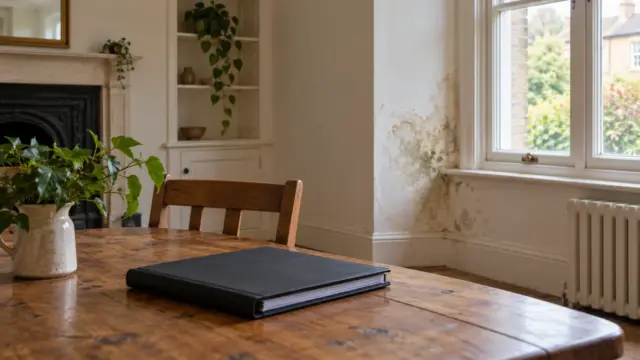
Describe the location in ordinary language: beneath the kitchen sink, beside the washing machine or on the ceiling below a bathroom. Note whether you see active dripping, pooled water, staining or only a change in a bill. Distinguish what you saw from what you think caused it.
For instance, “water appeared beneath the sink after washing dishes” is a useful observation. “The hidden supply pipe has failed” is a diagnosis you may not be able to support. Give the professional the first statement and let the investigation establish the second.
Keep away from water near electrical equipment, unstable surfaces or a visibly unsafe ceiling. Do not enter a hazardous space to improve a photograph or reach a valve. Contact the appropriate emergency service, utility or qualified professional for the circumstances. Follow their safety guidance rather than improvising a repair.
Make a short incident record
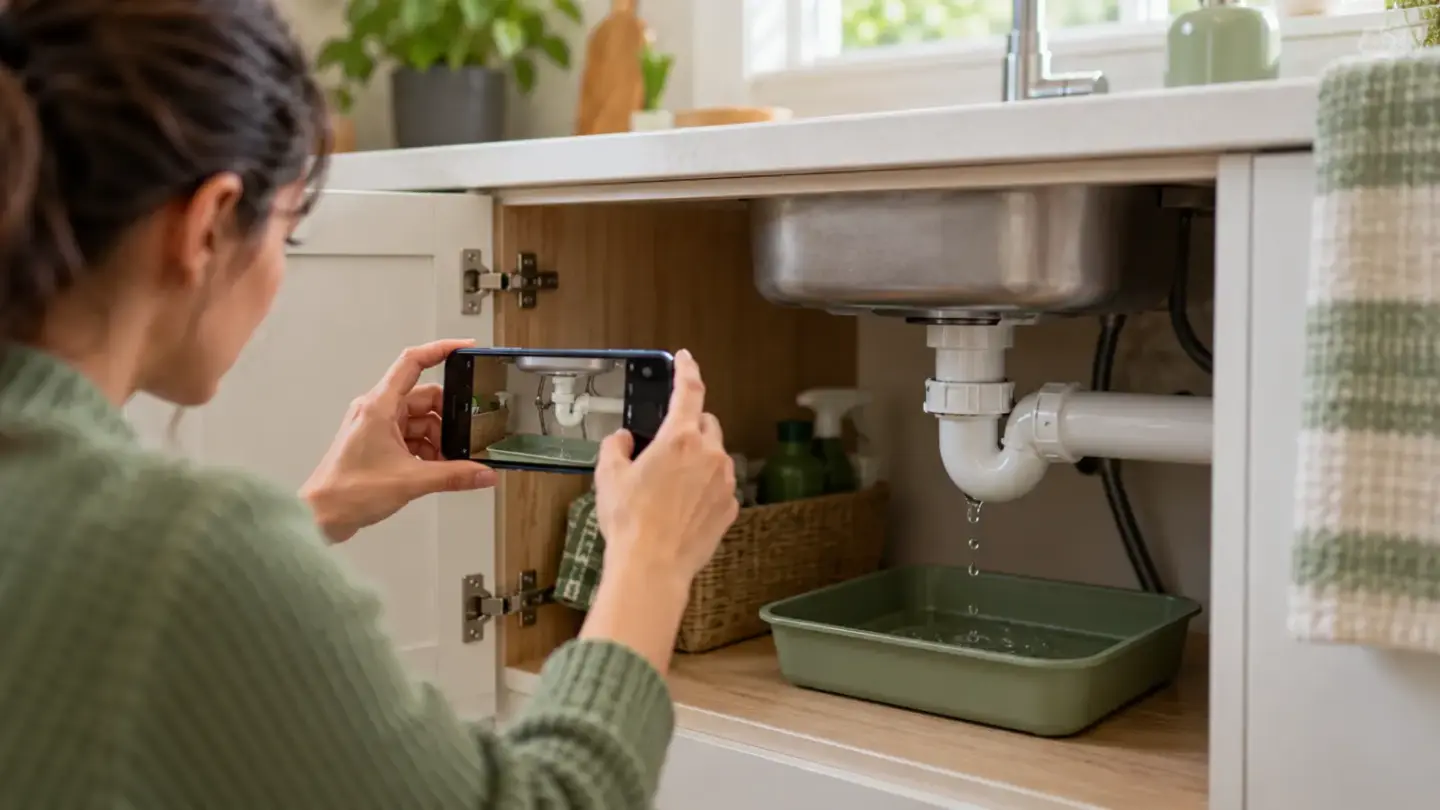
Record the date and approximate time, when you first noticed the issue and whether it seems continuous or associated with use of a fixture. If safe, take a wider photograph showing the location and a closer photograph showing the visible water or stain.
Include relevant recent events without deciding that they must be the cause. Examples might include recent plumbing work, a new appliance, unusually cold weather or a change in occupancy. A short timeline helps the plumber ask better follow-up questions than a collection of unlabelled images.
Do not repeatedly run an appliance or fixture to reproduce a leak if doing so could worsen damage. A description of what happened during ordinary use can be enough to begin the conversation. Ask the professional whether further observation is appropriate.
| Observation | Useful detail | Avoid assuming |
|---|---|---|
| Visible moisture | Location, time and safe photographs | That the visible point is the source |
| Pattern | Continuous or noticed after ordinary use | That one event proves the cause |
| Water use | Bill dates, units and actual readings | That every higher bill means a leak |
| Access | Property contact and safe access arrangements | That all cupboards or service areas are safe |
| Previous work | Relevant invoice and dates | That recent work automatically caused the issue |
Use the water bill as a clue
EPA WaterSense recommends monitoring household water use and comparing bills for signs of an unexplained increase. A useful comparison includes the billing period and recorded consumption, not just the amount charged. Price changes and different period lengths can alter a bill without the same change in water use.
Check whether the reading is actual or estimated and whether the household’s circumstances changed. More residents, irrigation or other legitimate uses can affect consumption. Write those changes beside the figures so the utility or plumber can interpret the comparison.
If a meter can be read safely and you understand the utility’s instructions, a change during a period without intentional use can be a clue to investigate. Do not lift heavy covers, enter confined spaces or alter utility equipment. Ask the water provider for help when access or interpretation is uncertain.
- Describe the visible symptom.
- Record when it appeared.
- Add safe photographs and relevant bills.
- Separate observations from guesses.
- Give the record to the responsible professional.
Understand what a leak alert can tell you
EPA distinguishes moisture-detection devices from systems that monitor water flow. A moisture sensor can alert to unexpected dampness at its location, while flow monitoring looks for patterns of use that may indicate an irregularity. These are different kinds of information.
Ask what a proposed device detects, where it must be installed and how alerts reach you. Check whether its useful features depend on power, connectivity, a subscription or additional equipment. A product name or general claim of smart protection is not enough to establish those details.
A sensor does not replace investigation or prove the source of water. Keep the alert time and message if it relates to the incident, and ask the installer about testing and maintenance. Do not assume that buying a device makes every part of the property monitored.
Keep a small-loss calculation separate from damage costs
Consider an invented steady loss of 2 litres per hour. Over 24 hours that is 48 litres. Over an assumed 30-day period it is 1,440 litres, or 1.44 cubic metres. The rate and duration are hypothetical and do not estimate the leak in your home.
If the variable water price in the example is 2 currency units per cubic metre, the direct variable charge is 1.44 multiplied by 2, or 2.88 units. That calculation excludes fixed charges, wastewater pricing, minimum charges and local tariff structures.
It also excludes damage to the building, investigation and repair. A modest calculated water charge does not mean an active leak is harmless or that waiting is sensible. Use the calculation only to understand units and consumption, not to decide whether a hazardous problem deserves attention.
- 2 litres/hour × 24 hours = 48 litres/day.
- 48 × 30 days = 1,440 litres = 1.44 cubic metres.
- 1.44 × 2 assumed price units = 2.88 variable-charge units.
- Property damage and repair costs are separate and unknown.
Ask what the plumber’s initial charge includes
When contacting a service, describe the observed issue and ask about availability, the attendance charge and what initial investigation includes. Clarify whether the quote is for diagnosis only or includes an agreed repair. Ask how further work is priced and authorised.
Keep diagnosis, repair and restoration separate in the estimate. Fixing a pipe may not include replacing damaged cabinetry or redecorating a wall. A clear scope makes it easier to understand which costs are known and which need another assessment.
The FTC’s home-repair guidance encourages checking contractors and obtaining written information rather than responding to pressure. Use the licensing and qualification checks appropriate to your location. An urgent problem does not make an unsolicited offer automatically trustworthy.
Coordinate responsibility and preserve records
If you rent or live in a managed building, notify the appropriate landlord, manager or emergency maintenance contact according to your arrangement. Ask who should arrange attendance and how access will be provided. Do not assume that a neighbouring property’s issue can be investigated without its responsible party.
If you may make an insurance claim, contact the insurer and ask about reporting, evidence and the next steps relevant to your policy. Keep invoices and photographs. This guide cannot determine whether a leak, resulting damage or a particular repair is covered.
After the visit, request a clear description of findings, completed work and any unresolved issue. Record follow-up instructions and who is responsible for them. A repair invoice is more useful when it can be connected to the original symptom and the agreed scope.
Our home project budget tool can separate confirmed repair and restoration costs. The editorial policy explains how general source guidance is used, and the contact page accepts corrections. Keep emergency requests with the appropriate local service; this publication does not dispatch plumbers.
Related guides
Continue with Basement Waterproofing Quotes: Inspection Questions Before Committing and Mould Remediation Quotes: Assessment, Scope and Professional Credentials. Each guide identifies its scope and any country-specific rules.
Common questions
Does a higher water bill prove there is a leak?
No. Compare consumption, billing periods, reading type and household changes. An unexplained increase is a reason to investigate, but the bill alone does not establish the cause.
Should I open a wall to find the source?
This guide does not recommend opening walls or attempting hidden-pipe repairs. Give safe observations to a qualified professional who can assess the appropriate investigation and associated risks.
What photographs are most useful?
If safe, take one wider image locating the issue and a closer image of the visible symptom. Include dates and descriptions without entering hazardous areas for a better view.
Should I run a fixture again to reproduce the leak?
Do not deliberately repeat an action that could worsen damage. Describe what happened during normal use and ask the professional whether any further observation is appropriate.
Can a moisture sensor identify every leak?
No. It detects conditions within its design and placement. Flow monitoring provides different information. Ask what is monitored, how alerts work and what maintenance the device needs.
Is the example water cost an estimate for my home?
No. The loss rate, duration and tariff are invented for unit arithmetic. Your consumption, tariff, damage, investigation and repair costs require their own assessment.
What if the leak is close to electrical equipment?
Keep away from the unsafe area and seek appropriate urgent professional or emergency assistance. Do not approach equipment or attempt a repair just to complete the record.
Does the attendance fee include fixing the problem?
That depends on the service’s quoted scope. Ask whether the charge covers attendance, diagnosis or a specific repair, and how additional work will be priced and authorised.
Will insurance pay for every leak-related cost?
Coverage depends on the policy and circumstances. Ask the insurer about reporting, evidence and relevant terms rather than assuming that the leak and all resulting work are covered.
What should I request after the plumber visits?
Ask for findings, completed work, charges and any unresolved issue in writing. Keep follow-up responsibilities and instructions with the original observations and relevant invoices.