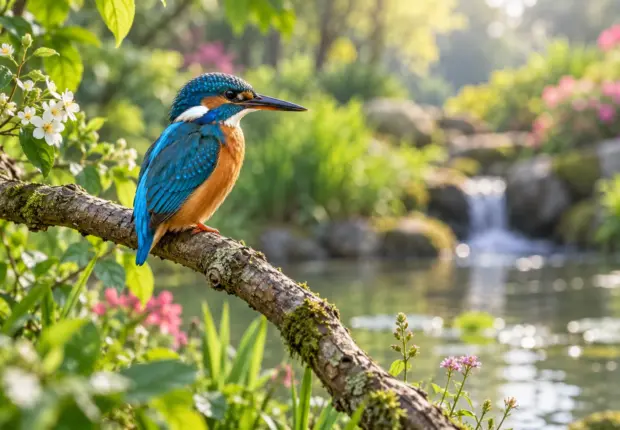
Finding a nest can feel like discovering a story in progress. It also creates a responsibility to avoid changing what happens there. The useful question is not how close you can get, but whether your presence is affecting the birds.
Stay with an unobtrusive view
Audubon’s ethical photography guidance puts the welfare of birds ahead of obtaining an image. Do not move vegetation, alter the surroundings or approach repeatedly to improve a view of a nest.
If your observation point requires standing in a route the birds need to use, choose another location or leave. Binoculars or a distant view may be suitable; sometimes the best choice is to stop watching.
Avoid creating an audience
Think carefully before sharing a precise nest location. A public post can bring people who do not understand the need for distance. A general account of your walk can convey the experience without directing others to the site.
Do not use playback, bait or staged interactions to create a photograph. Keep pets and groups away, and follow the site’s rules and relevant local wildlife protections.
Record only what you can observe safely
- Note the general habitat without exposing the exact location.
- Describe observations from an existing safe viewpoint.
- Keep the visit brief and leave if birds appear disturbed.
- Avoid returning simply to complete a photographic sequence.
Do not handle eggs, chicks or nesting material. If you believe an animal needs help, contact an appropriate local wildlife professional for guidance rather than improvising an intervention.
A respectful encounter may leave you with no photograph at all. It can still be a meaningful observation, with the birds continuing their lives without an audience at the edge of the nest.