Interior Painting Estimates: Preparation and Scope Matter as Much as Area
Compare interior painting estimates by included surfaces, preparation, products, coats, protection and completion work, with fictional area and cost calculations.

On this page
- Describe the surfaces, not only the room
- Make preparation a priced part of the scope
- Distinguish floor area from paintable area
- Confirm products, coats and coverage assumptions
- Compare the full cost breakdown
- Identify old-paint hazards before preparation
- Agree changes and completion checks
- Use the estimate as a working agreement
- Related guides
- Common questions
- Sources and references
Two interior painting estimates can describe very different jobs even when both name the same room. One may include wall repairs, ceilings and trim, while another covers only a finish coat on prepared walls. Compare the surfaces, preparation and finished scope before judging the total. This guide explains a quotation worksheet and fictional arithmetic. It does not provide local market prices or instructions for disturbing potentially hazardous old paint.
Describe the surfaces, not only the room
List walls, ceilings, doors, frames, skirting and any built-in surfaces separately. State which are included and which will remain untouched. A quote for a bedroom is ambiguous if it never explains whether the ceiling and woodwork are part of the job.
Record the existing condition and the desired result. Note visible cracks, staining, peeling or other problems for the contractor to assess. A new colour is a finish decision; the reason for a damaged or stained surface may need separate investigation before painting.
Identify access and protection needs. Ask who moves furniture, removes or protects fittings and returns the room to use. If the home remains occupied, explain practical restrictions on access and timing so the estimate reflects the actual working arrangement.
Make preparation a priced part of the scope
Benjamin Moore’s preparation guidance emphasises assessing surfaces and addressing relevant cleaning, repair and priming needs before painting. It also warns against painting over mildew. The appropriate preparation depends on the surface and problem; it is not identical for every wall.
Ask the contractor what preparation is included and how it will be described in the agreement. “Prepare as needed” may be too vague if one quote assumes substantial repairs and another assumes a ready-to-paint surface. Request clarification about known work and unresolved conditions.
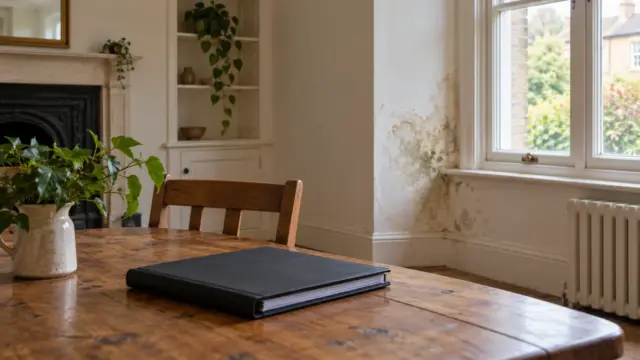
If damage suggests an underlying moisture problem, ask how that will be assessed before the finish is applied. Do not assume a stain-blocking product or new paint repairs the cause. This guide cannot diagnose building defects from a description or photograph.
| Part of the job | Specify | Clarify |
|---|---|---|
| Surfaces | Walls, ceiling, trim, doors and exclusions | Whether measurements cover the same areas |
| Preparation | Known cleaning, repairs and priming | What remains provisional after inspection |
| Finish | Product, colour, sheen and agreed coats | How any necessary additional coat is handled |
| Protection | Furniture, floors and fittings | Who moves and reinstates items |
| Completion | Cleaning, waste and inspection | How agreed corrections are recorded |
Distinguish floor area from paintable area
The floor size does not directly equal the wall area. For a fictional rectangular room four metres long, three metres wide and 2.5 metres high, the perimeter is fourteen metres. Multiplying perimeter by height gives 35 square metres of wall area before openings.
If fictional doors and windows total five square metres, the simplified net wall area is thirty square metres. This calculation excludes the ceiling and trim. A contractor may use a different estimating convention for openings and detailed work, so ask how the actual quote is measured.
Do not use a simplified area calculation as a substitute for a site assessment. Tall access, detailed edges, awkward surfaces and repair work can affect labour even when the net area is small. The aim is to understand the estimate, not to prescribe the contractor’s pricing method.
- Perimeter: 2 × (4 m + 3 m) = 14 m.
- Gross walls: 14 m × 2.5 m = 35 m².
- Assumed openings: 5 m².
- Simplified net walls: 30 m², excluding ceiling and trim.
Confirm products, coats and coverage assumptions
Sherwin-Williams notes that product quantities depend on application method and surface type or condition. A calculator is an estimate rather than a guarantee of exactly how much a job will consume. Use the chosen product’s current technical guidance and the contractor’s assessment.
Ask the quote to identify the finish product and sheen, along with primer where required. Record the agreed number of coats and how a change is handled if the surface or colour transition requires additional work. Avoid assuming that every primer and finish can be interchanged.
For fictional arithmetic only, thirty square metres receiving two finish coats represents sixty square metres of application. At an invented coverage assumption of ten square metres per litre, the theoretical requirement is six litres. This excludes losses, pack rounding and primer and is not an instruction to buy that quantity.
Compare the full cost breakdown
Suppose a fictional estimate contains labour of 450 currency units, finish paint of 90, preparation materials and work of 100, and protection and cleanup of 60. The total is 700 before separately applicable taxes or omitted work. These are invented amounts, not typical painting rates.
A second fictional quote of 550 may appear cheaper, but if it excludes the same 100 of preparation and 60 of protection and cleanup, a matched total would be 710. The comparison only works if the additional scope and amounts are genuinely equivalent.
Do not add guessed extras to a real quote and call it final. Ask the contractor to provide the missing scope and price. Mark an omission as unresolved until the response arrives, rather than treating it as either free or automatically expensive.
- Complete example A: 450 + 90 + 100 + 60 = 700.
- Example B headline: 550.
- If equivalent omitted work is confirmed at 100 + 60, B becomes 710.
- Compare confirmed scope, not an unsupported headline-price assumption.
Identify old-paint hazards before preparation
The US EPA warns that renovation or painting work in a pre-1978 home containing lead-based paint can generate dangerous dust. It recommends a lead-safe certified contractor for relevant work. This is a US housing-age example; other countries have different histories and requirements.
If old paint may be hazardous, obtain appropriate qualified assessment before scraping, sanding or other disturbance. Do not use a colour, surface appearance or online photograph to declare it safe. Ask the contractor how suspected material changes the preparation plan and quotation.
Keep specialist hazard work separate from ordinary decorating unless the written scope explicitly includes the appropriate qualified service. A general promise to clean up afterwards does not explain how exposure will be prevented during the work.
Agree changes and completion checks
The FTC advises consumers to check home-repair businesses and obtain written estimates while resisting pressure. Use a verified contact route, read the proposed contract and clarify payment timing. An urgent discount should not replace an understandable scope.
Ask how unexpected repairs or extra coats will be proposed and approved. Keep the reason, additional amount and schedule effect together in the written change. This helps distinguish an agreed variation from work you did not understand was being added.
At handover, inspect the agreed surfaces with the contractor and record any outstanding corrections. Keep product information for future maintenance, but do not assume leftover paint will always reproduce an invisible repair later. Follow the manufacturer’s storage and disposal instructions.
Use the estimate as a working agreement
The most useful quote makes it possible to identify the product, preparation, surfaces and finished result after the job begins. Resolve important unknowns before authorising work. Keep changes attached to the original scope so both parties can see what was agreed.
Use the home project budget tool to organise fictional totals and the monthly budget tool for payment timing. Our editorial policy explains why these calculations are illustrative. They are not a material specification, safety assessment or local contractor recommendation.
Related guides
Continue with Comparing Contractor Estimates: A Line-by-Line Homeowner Checklist and Flooring Installation Quotes: Preparation, Underlay, Removal and Finishing. Each guide identifies its scope and any country-specific rules.
Common questions
Does a room-painting quote always include the ceiling?
No. Ask the contractor to list walls, ceilings, trim, doors and exclusions explicitly. A room name alone does not establish the complete scope.
Can I compare quotes using floor area alone?
Floor area is not the same as wall area, and detailed preparation affects labour. Ask how each contractor measured and priced the actual surfaces.
Is preparation automatically included?
Do not assume so. Request a description of known cleaning, repairs and priming, and clarify what remains provisional after inspection of the existing surfaces.
Does painting over a stain fix the underlying problem?
Not necessarily. Ask whether the cause needs investigation or repair before painting. A finish product should not be assumed to resolve a building or moisture defect.
Are two coats always enough?
No universal number is established here. Confirm the chosen product, existing surface, colour change and agreed finish, including how any additional work would be approved.
Is six litres a buying recommendation?
No. It comes from invented area and coverage assumptions for arithmetic. Actual requirements depend on product guidance, conditions, losses, pack sizes and the contractor’s assessment.
Can I sand old paint to reduce the bill?
Do not disturb potentially hazardous paint without appropriate assessment. EPA identifies lead-dust risks in relevant US older homes; check qualified local guidance for your property.
Are the example prices current market rates?
No. Every price is fictional and demonstrates scope comparison. Obtain current written estimates for the actual surfaces, products, access and preparation required at your property.
What should a change to the estimate include?
Ask for the reason, proposed work, additional price and effect on timing before approval. Keep the agreed change with the original written scope.
How should I check completion?
Inspect the agreed surfaces with the contractor, record any outstanding corrections and keep the product information. Compare the result with the written scope and approved changes.