Cold-Climate Heat Pump Quotes in Canada: Equipment and Installation Factors
Connect the home's heating needs to cold-weather performance, installation work, backup controls, payment timing and documented aftercare.
On this page
- Start with the house and the heating objective
- Ask for performance at relevant cold temperatures
- Locate the installation costs beyond equipment
- Normalise fictional quotes before comparing totals
- Separate rebates from the amount you must pay
- Request a supported operating-cost estimate
- Make commissioning and aftercare part of the quote
- Related guides
- Common questions
- Sources and references
A Canadian heat-pump quote should describe a heating system suited to the home and climate, not simply name an outdoor unit. Two offers for equipment with a similar label can include different electrical work, distribution changes, controls and backup arrangements. Comparing the installed scope is the first step toward understanding the price.
This guide helps homeowners question cold-climate air-source heat-pump proposals. It is not a sizing calculation, installation instruction or forecast of savings for a particular building. Qualified local professionals need to assess the house and applicable requirements. The examples are invented and are not Canadian market-price estimates.
Start with the house and the heating objective
Tell each contractor which spaces must be heated, the present system, known comfort problems and any planned insulation or renovation work. Explain whether the aim is to replace the existing heating entirely, use the heat pump alongside it, or serve selected areas. Otherwise, contractors may price different projects while appearing to answer the same request.
Ask for the basis of the heating and cooling load assessment. Natural Resources Canada’s technical guide recommends professional sizing that considers the building loads, local climate and installation objectives. A familiar unit size or a neighbour’s successful installation is not evidence that the same system fits your house.
Record any planned building-envelope work before the design is finalised. Ask whether the proposal assumes the house as it stands or the house after those changes. If the assumptions differ between quotes, request an explanation rather than treating the resulting equipment difference as an error or an automatic upgrade.
Ask for performance at relevant cold temperatures
Request the exact indoor and outdoor model combination and the manufacturer’s performance information used in the proposal. Ask how available heating capacity at the local design conditions relates to the assessed load. A seasonal efficiency rating and the ability to deliver enough heat during a cold period answer different questions.
The Government of Québec’s heat-pump guidance identifies climate, construction, insulation, airtightness and windows among the factors relevant to sizing. Its local advice should not be converted into one nationwide temperature promise. Ask the contractor to explain the particular model and the particular home together.
Where supplemental heat remains necessary or is part of the design, ask which equipment provides it, how the controls switch or combine operation and what maintenance remains. Do not assume that the phrase cold climate means a backup source is never needed, or that every installation must use the same backup strategy.
| Quote item | Evidence to request | Question left open by a headline price |
|---|---|---|
| Design | Load assumptions and heating objective | Which spaces and conditions are covered? |
| Equipment | Exact matched model numbers | What cold-weather performance is assumed? |
| Distribution | Duct, indoor-unit or airflow scope | Are changes to existing distribution included? |
| Electrical and controls | Defined work and responsible trades | What remains subject to assessment? |
| Completion | Commissioning, handover and warranty terms | Who verifies operation and supports it? |
Locate the installation costs beyond equipment
Ask the contractor to separate equipment, labour and additional works sufficiently for you to understand the offer. Relevant questions can include duct modifications, indoor-unit placement, line routing, wall penetrations, mounting, electrical assessment and disposal of replaced equipment. The assessment determines which items apply; the list is not a specification for work every house needs.
Clarify access constraints and responsibility for making good finishes. A quote that assumes easy access may change if concealed conditions are discovered. Ask how variations are documented, priced and agreed, and which uncertain items are provisional. A large unexplained allowance is difficult to compare with a fixed scope that has already been inspected.
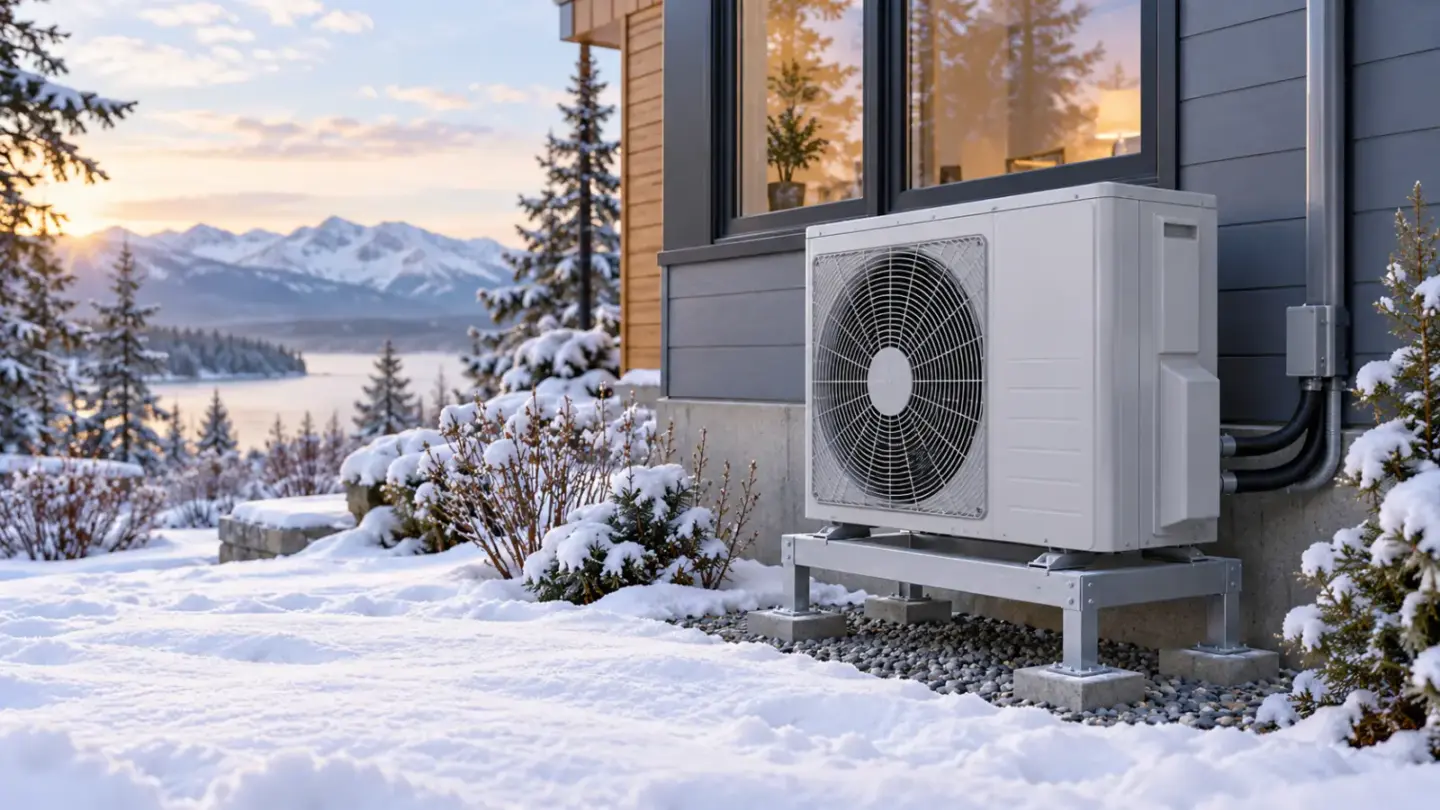
Ask about the proposed outdoor location, snow and drainage considerations, service access and noise. Hydro-Québec’s buying checklist draws attention to siting, noise, the building envelope and backup heating. Local bylaws and the manufacturer’s installation requirements still need to be checked for the actual proposal.
From house to commissioned system
- Record the home’s condition and comfort objective.
- Assess loads and select the matched equipment.
- Define distribution, electrical work and controls.
- Agree the installation scope and variation process.
- Commission, demonstrate and document the finished system.
Normalise fictional quotes before comparing totals
Use one clearly stated currency when comparing quotes. In this example all amounts are fictional Canadian dollars. Quote A lists C$9,000 for equipment and installation, C$1,200 for defined electrical work, C$800 for duct changes and C$300 for removal. The pre-tax total is C$11,300.
Quote B lists C$10,700 including the same electrical work and removal, but excludes the C$800 duct scope. Adding that matching work gives C$11,500 before tax, a difference of C$200. This arithmetic is meaningful only if a competent assessment confirms the scopes and equipment meet the same requirements; it does not establish technical equivalence.
Keep taxes, financing and any uncertain allowance visible. If a provisional C$600 item might be needed, label it as conditional rather than silently adding it to one quote and excluding it from the other. Ask what evidence will settle the item and when its price becomes firm.
Separate rebates from the amount you must pay
Verify any incentive directly with the responsible programme before relying on it. Ask about current availability, eligible households and equipment, application order, installer requirements, documentation and deadlines. A contractor’s marketing figure is not proof that your application will be approved or that funds will arrive before the installation bill.
The NRCan heat-pump resource explains system considerations within a programme context. Historical programme pages and equipment lists should not be read as evidence that a grant remains open. This guide makes no claim that a particular federal or provincial incentive is currently available to you.
For planning, show the gross amount due, any independently confirmed expected reimbursement and the timing separately. If a hypothetical C$2,000 reimbursement follows payment of C$11,300, the eventual net is C$9,300, but the initial funding need can still be C$11,300. Approval, tax and financing effects are outside that simple example.
Request a supported operating-cost estimate
Ask the contractor to identify the energy prices, weather assumptions, existing equipment efficiency and control settings behind any estimate. Explain whether you also expect new cooling use or a different comfort level. A comparison that changes household use at the same time as equipment cannot attribute the entire bill difference to the heat pump alone.
Keep estimated savings separate from guaranteed contract obligations. NRCan notes that outcomes depend on climate, the present system, equipment and controls. Ask for a sensitivity check using different energy prices or greater supplemental-heating use. A simple payback number is not reliable if its annual-saving input is unsupported.
Make commissioning and aftercare part of the quote
Ask who checks the installation, documents operation and demonstrates the controls. Obtain the equipment and workmanship warranty terms separately, including registration requirements and the route for service. Confirm what routine maintenance is expected, what the owner can safely do and which work requires a qualified professional.
Keep the handover complete
- Design record: scope, model combination and assumptions.
- Installation record: agreed changes and completion checks.
- Operation: control demonstration and maintenance instructions.
- Support: warranties, invoices and service contacts.
Our home-project cost tool can organise quoted amounts and separate allowances. Use the monthly budget planner for payment timing, and read the methodology for how fictional examples are used. Neither tool sizes equipment or predicts a particular home’s energy use.
Related guides
Continue with HVAC Repair vs Replacement: Costs and Questions for a Licensed Contractor and Smart Energy Devices: Measuring Savings Instead of Trusting Marketing Claims. Each guide identifies its scope and any country-specific rules.
Common questions
Does cold climate mean the same performance in every winter?
No. Ask for the exact equipment’s capacity at conditions relevant to the home and how that compares with the assessed heating load. A general label does not replace the model data, local climate assumptions or a designed approach to supplemental heat.
Can I size a system from floor area alone?
Floor area is only one input. Construction, insulation, windows, location and the intended heating objective also matter. Request a professional assessment and an explanation of its assumptions. This guide does not supply a unit-size formula for a house it has not inspected.
Will I need an electrical upgrade?
The actual equipment and existing electrical installation need assessment. Ask what is included in the quote, what remains uncertain and which qualified trade is responsible. Do not assume an upgrade is always required or always unnecessary from the heat-pump label alone.
Why do quotes include different equipment sizes?
Contractors may have different load assumptions, heating objectives, distribution designs or backup strategies. Ask them to explain those differences against the same project brief. The larger model is not automatically better, and the cheaper offer is not automatically technically equivalent.
Are the C$11,300 and C$11,500 totals typical prices?
No. They are invented totals used to show how excluded work changes a comparison. They do not represent a region, installer or actual model. Obtain current itemised quotes after assessment of your property, and confirm whether taxes and other costs are included.
Can I deduct a rebate from the amount needed upfront?
Only if the verified programme and payment arrangement support that timing. A reimbursement received later may reduce eventual net cost without reducing the installation bill due first. Check eligibility, approval, application steps and payment timing directly before relying on the money.
Does a grant equipment list prove the design is suitable?
No. Programme eligibility and suitability for a particular home are separate questions. Even an eligible model needs correct selection, matching components and installation. Confirm the current programme terms and ask the contractor to explain the technical design independently of the incentive.
Can I assume my heating bill will fall by a set percentage?
No universal percentage is established here. Ask for the assumptions behind an estimate, including energy prices, current system, climate, controls and household use. Changes in cooling use or comfort settings can also affect the comparison, so keep estimated savings clearly labelled.
What should the handover include?
Request the model and installation records, operating instructions, control demonstration, warranty conditions and maintenance requirements. Confirm whom to contact for faults or performance questions. A completed installation is easier to manage when the documentation explains the system that was actually fitted.
Does this guide cover every province’s rules?
No. It combines national technical information with clearly identified Québec sources for a general Canadian buying framework. Local requirements, utility programmes and installer qualifications must be checked for the actual location. No nationwide permit, rebate or compliance conclusion is implied.