Replacement Window Quotes: Glass, Frames, Installation and Disposal
Match window specifications, installation scope, disposal and exclusions before comparing a home replacement-window proposal by its total price.
On this page
- Create a room-by-room window schedule
- Compare the whole product, not one attractive feature
- Read performance ratings in context
- Understand what the installer plans to remove
- Make disposal, access and protection explicit
- Normalize the price before judging the cheaper bid
- Review the contractor, contract and warranty
- Check delivery and completion against the schedule
- Related guides
- Common questions
- Sources and references
A replacement-window quote should describe more than a brand and a price per opening. Glass configuration, frame material, opening style, installation method and finishing work can all change what is being supplied. Before comparing totals, ask each contractor to quote the same window schedule and identify exactly what happens to the existing units and surrounding finishes.
This US homeowner guide is a purchasing checklist, not an installation manual or a determination of building-code requirements. A qualified contractor must assess the actual openings and site conditions. All prices below are fictional arithmetic examples, and no energy-saving percentage or project payback is promised.
Create a room-by-room window schedule
Give each opening a simple identifier, such as kitchen one or bedroom two. Record its location, approximate size for discussion, current operating style and the problem you want addressed. Let the contractor take the measurements required for ordering. A homeowner’s rough measurement should not silently become the final manufacturing dimension.
Note whether your priority is operation, comfort, appearance, water entry or another concern. A difficult-to-open sash and damaged surrounding construction may require different work. Ask the contractor to distinguish the window product from repairs to the opening or wall. If the cause of a problem is not established, keep that uncertainty in the quote discussion.
Give every opening a complete specification
- Location: a room and identifier that everyone recognizes.
- Product: size, operating style, frame and glazing configuration.
- Installation: what is removed, retained, sealed and finished.
- Handover: inspections, operating checks, warranty documents and cleanup.
A shared schedule makes omissions easier to find across competing bids.
Compare the whole product, not one attractive feature
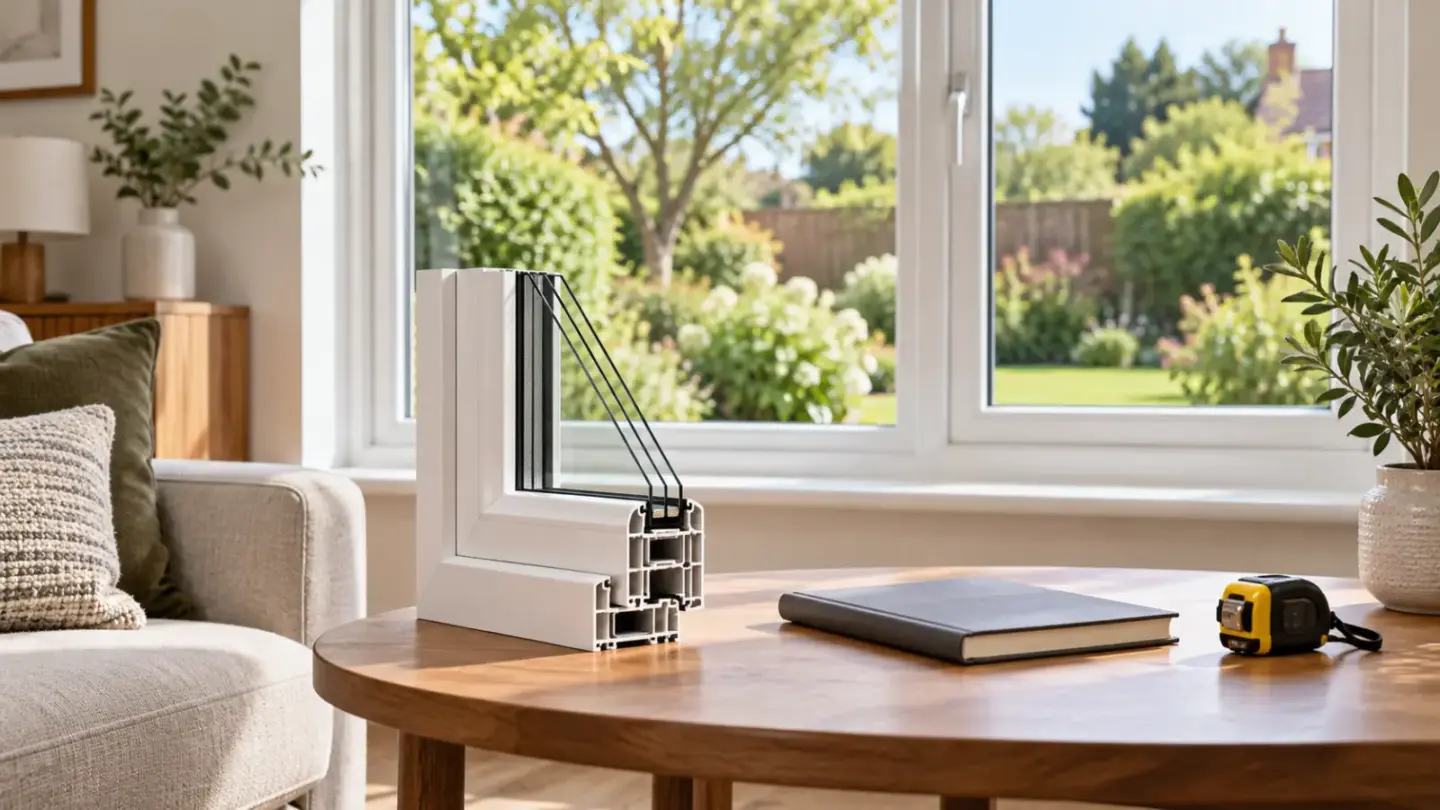
The Department of Energy’s window guide discusses glazing, coatings, frames and other features that affect window performance. It also emphasizes installation. Its general explanation is useful for understanding the parts of a quote; older example savings and incentive information should not be treated as a current offer for your home.
Ask for the exact product line and configuration, not just “double glazed” or “energy efficient.” Two units from the same manufacturer can differ in frame, glass options, size and operating style. If a contractor offers a substitution, ask which specifications change and how the proposed alternative will be documented before it is ordered.
Read performance ratings in context
The National Fenestration Rating Council explains its energy-performance labels, including U-factor and solar heat gain coefficient, or SHGC. Lower U-factor indicates better resistance to heat transfer. SHGC concerns the share of solar heat transmitted through the product; the suitable choice depends on the home’s climate and design rather than a universal instruction to maximize or minimize every number.
ENERGY STAR’s residential window guidance links product selection to climate zones and recommends comparing quotes broken down by labor and materials. Ask the bidder to identify the product’s actual labels and rating information. A label for one configuration should not be used to describe a different unit that happens to share a brand name.
Keep energy performance separate from other desired qualities. A rating does not by itself settle durability, appearance, operating convenience, sound reduction or installation quality. If a salesperson makes a claim about one of those features, ask what documentation supports it for the exact product and what the warranty actually covers.
| Quote component | Details to record | Common unanswered question |
|---|---|---|
| Window product | Manufacturer, line, dimensions, style and configuration | Is this the same unit in every bid? |
| Performance | Relevant labels and ratings for that configuration | Does the cited rating apply to the supplied product? |
| Removal and fitting | Retained frame parts, removal scope and installation method | What surrounding work is excluded? |
| Finishes | Interior trim, exterior finish, paint and cleanup | Who restores disturbed surfaces? |
| Unexpected conditions | Allowances and written change process | Who approves added work and its price? |
Understand what the installer plans to remove
Ask the contractor to describe whether the proposal retains parts of the existing frame or removes the assembly more extensively. Terminology can differ, so request a plain explanation of the actual work. Ask how the chosen approach affects visible glass area, existing trim and any identified damage around the opening.
Do not choose an installation method from a generic checklist alone. The condition of the existing opening and the manufacturer’s instructions matter. Ask how water management, sealing and the surrounding finishes will be addressed, and who is responsible if previously hidden deterioration is found. Record what assessment has already occurred and what cannot be confirmed until removal.
Make disposal, access and protection explicit
Ask whether the quote includes removal from the property, disposal charges, delivery and protection of rooms and landscaping. Discuss access to upper-floor openings and any equipment the contractor expects to use. If furniture, window coverings or security sensors must be moved, agree who handles that work and restores it afterward.
Also ask about dust control, site protection and applicable requirements for the building’s age and condition. This is a request for the contractor’s plan, not an instruction to disturb old materials yourself. A clear scope reduces surprises such as discovering that disposal or finish repair was assumed to be the homeowner’s responsibility.
Normalize the price before judging the cheaper bid
Suppose a fictional quote totals $7,800 for a defined set of windows but excludes $300 of disposal and $500 of specified finishing work. Its comparable known total is $8,600. A second fictional quote is $8,300 with those same items included. The second is $300 lower for that matched scope, even though its initial headline number was higher.
The comparison still needs all other specifications to match. If one quote uses a different glazing package or leaves a damaged opening unresolved, adding two allowances does not make the bids equivalent. Keep unresolved items visible rather than choosing a convenient estimate for them and presenting the result as a firm contract total.
Build a comparable project total
- Start with the written price for the specified windows and installation.
- Add known excluded work needed for the same finished result.
- List conditional allowances separately.
- Keep optional upgrades outside the base comparison.
Use the same quantities, specifications and finishing assumptions in every column.
Review the contractor, contract and warranty
The FTC’s home improvement guidance recommends checking contractors, obtaining written estimates and carefully reviewing agreements. Verify the applicable licensing and insurance for your location. Ask for references relevant to similar work, and keep promises about scope or timing in the written agreement.
Separate the manufacturer’s product warranty from the installer’s labor or workmanship terms. Ask who receives a service request, what documents are needed and which costs remain your responsibility. A long warranty label is not enough information if removal, travel or reinstallation charges are excluded. Read the actual terms rather than relying on a verbal summary.
Check delivery and completion against the schedule
Before existing units are removed, confirm that delivered products match the order and record any discrepancy. At completion, review the agreed work room by room with the contractor: operation, visible finishes, cleanup and the promised documentation. Keep the final invoice, product information and warranty records with your opening schedule.
The home project budget calculator can combine stated costs and a contingency you choose. The loan tool models fixed-rate payments without fees if you are considering financing; it does not verify a promotional offer. Read our methodology for how examples are distinguished from quotes. The most useful outcome is a defined finished job and accountable written terms, not merely a low price per window.
Related guides
Continue with Comparing Contractor Estimates: A Line-by-Line Homeowner Checklist and Smart Energy Devices: Measuring Savings Instead of Trusting Marketing Claims. Each guide identifies its scope and any country-specific rules.
Common questions
Is a price per window enough to compare bids?
No. First match the number and dimensions of units, product configuration, installation method, finish work and exclusions. A per-window average can combine very different jobs. Ask for a written schedule so the quote comparison reflects the same supplied products and completed work.
Does the same brand mean the same performance?
No. One manufacturer can offer product lines and configurations with different ratings. Request performance information for the exact units being supplied, including the relevant glazing and frame options. A familiar brand name does not replace checking the details recorded in the estimate.
Is lower U-factor generally better insulation?
Generally, a lower U-factor indicates less heat transfer through the rated product. It is one comparison measure, not the whole purchasing decision. Installation, climate, other ratings and the home’s needs still matter, so do not choose solely by a single number without matching configurations.
Should every home choose the same SHGC?
No. Solar heat gain considerations depend on climate and design. Use the relevant product guidance and a qualified assessment for the property. A value suitable for one situation should not be copied universally, and a label alone does not describe every comfort or energy consequence.
Can I use rough measurements to place the order?
Have the contractor establish final ordering measurements and clarify responsibility for them. Informal dimensions may be useful for discussing scope, but they should not silently become the accepted specification. Record the exact units and measurement responsibility before relying on the final price and order.
Does replacement always include trim and painting?
No. Ask whether interior and exterior trim, painting and other restoration are included, and who completes anything excluded. Two quotes can differ substantially on finishing work even when the window units match. Mark unresolved items rather than assuming the room is returned to the same condition.
Are disposal charges always included?
No. Confirm removal, transport, disposal and cleanup in the written scope. An installation quote may describe replacement work without answering all those questions. If a separate charge applies, include it in the matched total so the comparison does not favor an incomplete headline figure.
What if hidden damage is discovered?
Use the agreed change process to document the condition, proposed work, price and authorization. Ask how schedule effects and unfinished areas will be handled. A general allowance or contingency should not replace an explanation of the specific additional work being proposed.
Are the $7,800 and $8,300 figures local quotes?
No. They are hypothetical totals showing how scope adjustments can change a comparison. They are not local bids or market averages. Obtain current estimates for the actual property and products, then compare their inclusions and uncertainties before deciding which offers better value.
Does an energy label guarantee a bill saving?
No. Ratings support product comparisons, while household results also depend on existing windows, installation, climate, usage and other conditions. This guide promises no saving. Keep any estimated energy benefit separate from the contractor’s price and make the assumptions visible in a budget.
Sources and references
- DOE: Consumer Guide to Energy-Efficient Windows, 2021 general principles.
- NFRC: Window energy-performance ratings
- ENERGY STAR: Residential Windows, Doors and Skylights
- FTC: How To Avoid a Home Improvement Scam
Sources checked October 17, 2026. No property inspection, local code review or contractor endorsement is claimed.