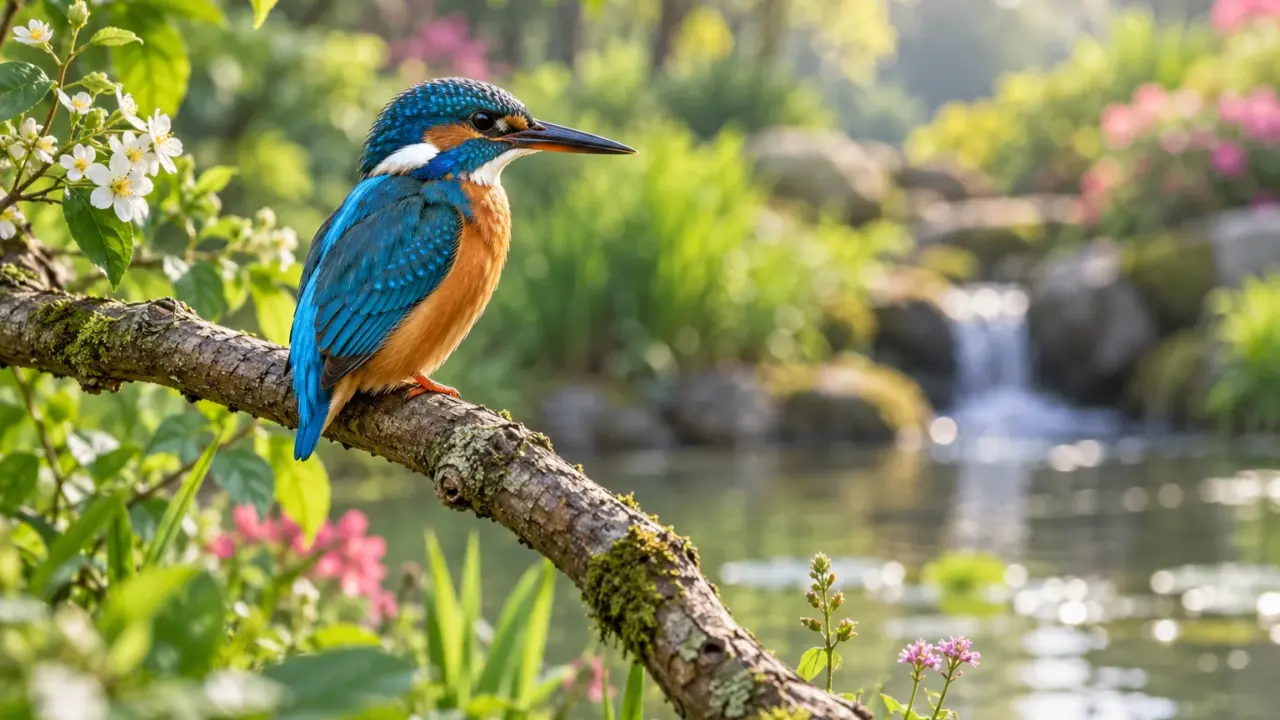
A flash of colour on a branch can turn an ordinary morning into a small discovery. Birdwatching can begin wherever you can watch quietly without disturbing wildlife—even from a window.
Pick one place to watch
Choose a comfortable viewpoint and spend a few minutes observing what is already there. Note the time, weather and the places birds use. You might see patterns over several visits that a single glance would miss.
Keep your distance from birds and nests. A photograph is optional; an undisturbed animal is the priority. Binoculars can help you see more without moving closer.
Describe before you identify
Write down shape, size, colours, movement and sound. An entry such as “small bird, blue back, long beak, beside water” is more useful than a confident guess with no details. Compare your observations with a trusted local field guide.
The illustrative image above was created with AI. Use verified field guides and real observation records for species identification, since a generated picture is not documentary evidence.
Keep the garden healthy
If you provide bird food or water, follow current local wildlife guidance. The RSPB emphasises cleaning feeders and water containers, avoiding accumulated waste and responding promptly to signs of disease. Feeding advice can vary by season and region.
A journal can simply be a page with four headings: date, place, what I noticed and what I want to learn. Leave room for uncertainty. Not every sighting needs a name to be worth remembering.