A bird against a bright sky may show little colour, yet still offer useful details. Instead of trying to recover markings you cannot see, describe the outline: the bill, body, wings, legs and tail.
Break the outline into parts
Start with the overall impression, then look at one feature at a time. Does the bill appear short or long relative to the head? Is the tail held straight, raised or spread? Are the legs visible from your viewpoint?
These are observations to record, not a formula that guarantees identification. Posture and viewing angle can change the apparent shape.
Make comparisons carefully
Use relative descriptions such as “tail about half the visible body length” if you have a clear enough view. Avoid precise measurements guessed from a distant bird with no reliable scale.
Sketch an outline quickly and label the parts you are confident about. Leave uncertain areas unfinished rather than adding details you expect to be there.
Add context before checking a guide
Record whether the bird was perched, walking, swimming or flying, and describe the setting. Combine shape with any genuinely observed markings or sounds when you compare references later.
- Overall size impression.
- Bill and head outline.
- Tail shape and position.
- Visible posture or movement.
- Limits of the view.
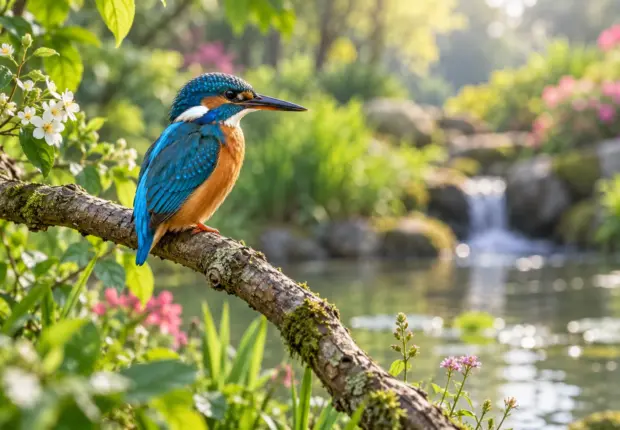
Use trustworthy local guides and photographs with reliable identification. AI-generated illustrations, including decorative images on this site, are not suitable evidence for distinguishing closely similar species.
A silhouette exercise is useful even if the bird remains unnamed. It trains you to preserve the information that was actually available instead of filling gaps with a likely-looking picture.
Keep reading: another guide from our pet journal.